



March, 19-20, 2026
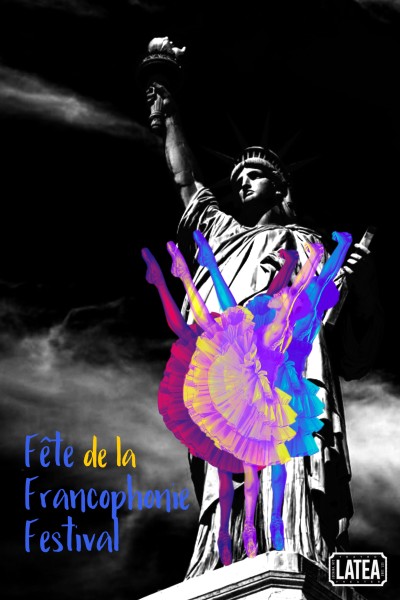
Fête de la Francophonie Festival
Company: Carole Alexis / Ballet des Amériques
Venue: Teatro Latea
Location: New York, NY
 Carole Alexis
Teatro LATEA, under the direction of Miguel Trelles, is proud to present the Festival de la Francophonie, a vibrant celebration of the French language and the richness of Francophone cultures from around the world.
Each year in March, the 93 member countries of the International Organization of La Francophonie (OIF) come together to honor the linguistic, cultural, and artistic diversity of the French-speaking world, including Creole languages. Rooted in shared values of peace, democracy, human rights, education, and gender equality, the Festival is both a celebration and an open invitation to engage deeply with the living, evolving cultures of Francophonie.
The 2026 edition, the first to be hosted at Teatro LATEA, will present a diverse and dynamic program featuring French-language cinema, conferences, dance, concerts, theatrical performances, discussions, and more. More than a series of events, the Festival encourages participants to activate their Francophonie, connect with Francophones and Francophiles alike, take part in cultural and community-building activities, and experience the vitality of a language spoken by over 300 million people across five continents. Each gathering reaffirms that French—and languages more broadly—are alive, dynamic, and deeply unifying.
The concept of Francophonie was first articulated in the 1880s by French geographer Onésime Reclus, who used the term to describe the global presence of French-speaking communities. Later, Léopold Sédar Senghor, Senegal’s first president, became a founding figure of the Cultural and Technical Cooperation Agency (ACCT) in 1970, the institution that would evolve into today’s Organisation Internationale de la Francophonie (OIF). A poet, statesman, and philosopher, Senghor championed the French language as a means of dialogue and cultural exchange while affirming African identity through the philosophy of Négritude and his vision of a “Civilization of the Universal.” His commitment to cooperation rather than colonial legacy helped shape a framework for meaningful Francophone collaboration, establishing French as a bridge between cultures and a shared language of international exchange.
Carole Alexis / Ballet des Amériques
107 Suffolk St
New York, NY, 10002
(212) 529-1948
https://teatrolatea.org/events/photo/2026-02-01/
Schedule
March 19, 2026: 6:00pm
March 20, 2026: 6:00pm